Hello, I am a Korean skin treatment expert and SEO writer. Are you concerned about enlarged pores, deep acne scars, and fine lines that have settled like traces of time in the mirror? Smooth and healthy skin is a dream for many and a source of confidence. Among the numerous methods to address these skin concerns, 'Dermatology Fraxel' is a representative treatment that has been loved for a long time due to its excellent effects.
However, while you may have heard the name 'Fraxel' many times, you might have many questions about its exact working principle, types, and post-treatment care. In this article, we aim to delve deeply into everything about Dermatology Fraxel treatment from an expert's perspective. We will provide detailed information from the basic principles of Fraxel to its various types, treatment process, expected effects and precautions, and expert tips for successful treatment. We hope this article will be of practical help in resolving your skin concerns.
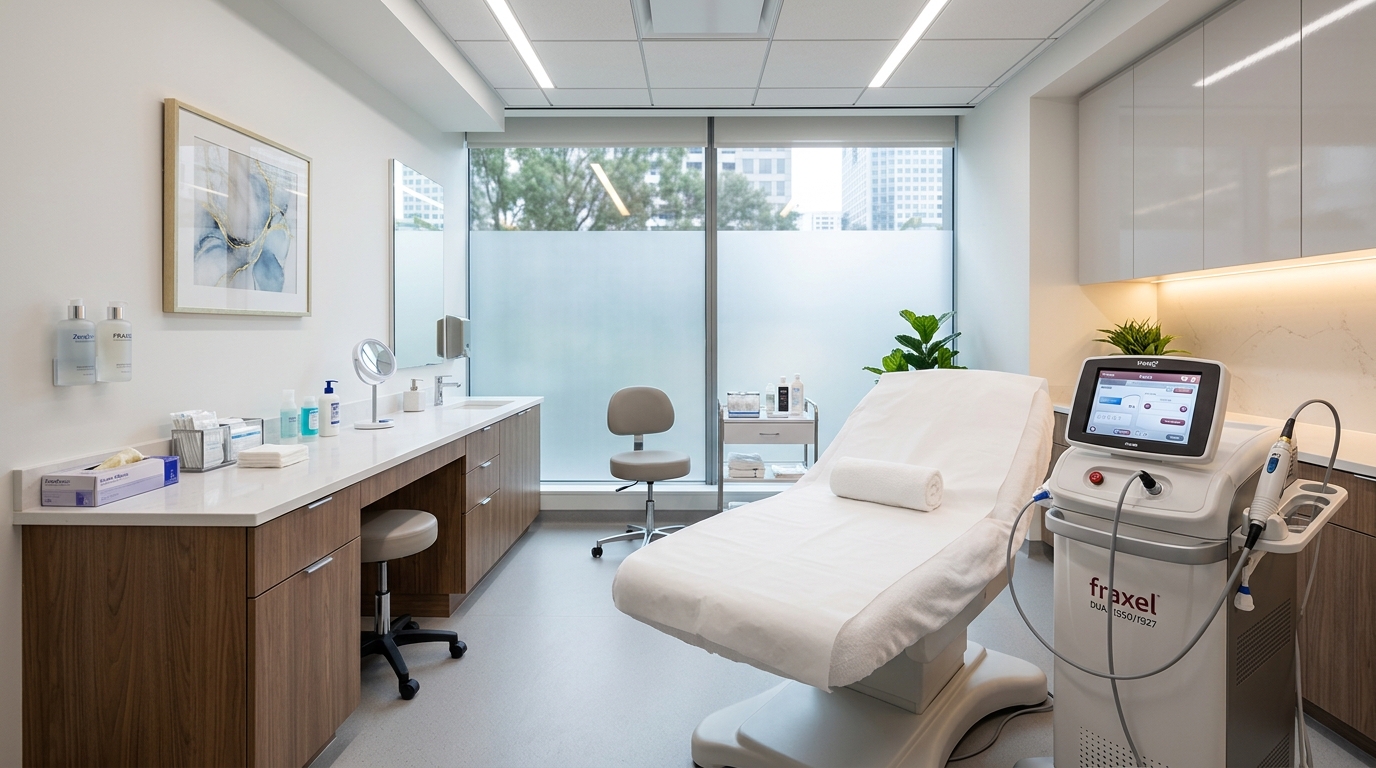
Fraxel, what exactly is this treatment?
Fraxel is an abbreviation for 'Fractional Laser' and is widely used as a general term for laser treatments that induce skin regeneration by creating microscopic holes on the skin surface. Strictly speaking, 'Fraxel' is a brand name for a specific device, but in Korea, it is used like a common noun encompassing all fractional laser treatments.
The Principle of Fraxel: Microscopic Treatment Columns
Fraxel laser does not apply thermal energy to the entire skin at once; instead, it irradiates thousands of microscopic laser beams, thinner than a strand of hair, deep into the skin. As these microscopic laser beams penetrate the skin, they create small, column-shaped damaged areas called 'Microthermal Treatment Zones (MTZ)'. The important point here is that the normal skin tissue surrounding these microscopic damaged areas is left intact.
The surrounding healthy skin tissue acts as a 'recovery center' that aids in the rapid healing and regeneration of the damaged areas. Our bodies undergo a natural regeneration process to heal damaged areas on their own, and Fraxel maximizes this self-healing ability to promote the production of new collagen and elastin. As a result, old and damaged skin cells are shed, and new, healthy skin cells fill in, leading to overall skin improvement.
Fraxel, recommended for these individuals!
Fraxel is an effective treatment for various skin problems and is particularly recommended for those with the following concerns:
- Acne Scars: Alleviates pitted acne scars (icepick, rolling, boxcar scars) and smooths the skin.
- Enlarged Pores: Shrinks enlarged pores, improves skin texture, and enhances cosmetic absorption.
- Fine Lines and Reduced Skin Elasticity: Promotes collagen production to reduce fine lines and improve skin elasticity.
- Hyperpigmentation and Melasma: Some Fraxel devices also help improve epidermal pigment lesions, evening out skin tone.
- Overall Skin Texture Improvement: Transforms rough and dull skin into soft and healthy skin.
- Stretch Marks and Surgical Scars: Can also provide auxiliary effects in improving stretch marks or old surgical scars.
Various Fraxel Types, Which Treatment is Right for Me?
As mentioned earlier, 'Fraxel' is used as a general term for fractional laser treatments. There are various types of fractional laser devices on the market, and each device differs in laser wavelength, penetration depth, and treatment method, making it important to choose the appropriate treatment based on individual skin condition and improvement goals.
Non-ablative Fraxel vs. Ablative Fraxel
Fraxel lasers can be broadly divided into 'Non-ablative' and 'Ablative' types.
-
Non-ablative Fractional Laser:
- Principle: Induces collagen regeneration by causing microscopic thermal damage only to the dermis layer without damaging the skin surface.
- Features: Typically uses an Erbium Glass laser with a 1550nm wavelength. Since there is no damage to the skin surface, the recovery period is short, and daily life can be resumed quickly. Pain and risk of side effects are relatively low.
- Effects: Primarily effective for fine lines, pores, skin texture improvement, and mild acne scars. Requires multiple repeated treatments.
- Example Devices: The 1550nm mode of the original Fraxel Dual, etc., falls into this category.
-
Ablative Fractional Laser:
- Principle: Simultaneously removes (ablates) microscopic portions of the epidermis and part of the dermis while delivering thermal energy to induce powerful skin regeneration.
- Features: Primarily uses CO2 (carbon dioxide) laser or Erbium YAG laser with a 2940nm wavelength. Since skin surface damage is involved, the recovery period is longer than non-ablative Fraxel, and reactions such as redness and scabbing are more pronounced.
- Effects: Effective for deeper acne scars, severe pores, severe fine lines, and reduced skin elasticity, where more powerful improvement is needed. Dramatic effects can be expected even with a single treatment.
- Example Devices: CO2 Fraxel, Erbium YAG Fraxel, etc.
In addition, there are various other types of devices, such as Fraxel specialized for pigment lesion improvement using a 1927nm wavelength (1927nm mode of Fraxel Dual), or 'Pico Fraxel' which combines the advantages of pico laser and Fraxel. It is crucial to consult sufficiently with an expert to choose the most suitable treatment, considering your skin type, the depth of your concerns, expected effects, and available recovery time.
Fraxel Treatment Process, Pain, and Recovery Period
Fraxel treatment is a delicate medical procedure, so pre- and post-treatment care is very important. Understanding the general treatment process will help you prepare mentally.
Pre-treatment Preparation
- Detailed Consultation: Consult thoroughly with a dermatologist about your current skin condition, concerns, medical history, and medications. Discuss expected effects and potential side effects sufficiently, and determine the appropriate Fraxel type and treatment intensity.
- Cleansing and Anesthesia: Cleanse the treatment area thoroughly, then apply anesthetic cream and wait for about 30 minutes to 1 hour to reduce pain.
Treatment Process
After removing the anesthetic cream, the medical staff uses a laser device to irradiate the Fraxel laser onto the treatment area. During the treatment, you may feel stinging, burning, and heat. The degree of pain varies greatly among individuals, but it is often tolerable thanks to the anesthetic cream. Treatment time varies depending on the area and scope, but usually takes about 10 to 30 minutes.
Post-treatment Care and Recovery
After Fraxel treatment, you will experience the following reactions and recovery process:
- Immediate Reactions: Immediately after treatment, the skin may become red and swollen, accompanied by a burning sensation. This is a normal reaction and can be alleviated with cold compresses.
- Redness and Swelling: Redness can last from 2-3 days to over a week, and swelling often subsides within 1-2 days.
- Micro-scabs and Exfoliation: In the case of non-ablative Fraxel, subtle exfoliation may occur; for ablative Fraxel, visible micro-scabs or peeling may appear. These scabs naturally fall off within 3-7 days. It is crucial not to forcibly remove them.
- Skin Dryness and Tightness: The skin may feel dry and tight after treatment, so sufficient moisturizing is essential.
- Recovery Period: Non-ablative Fraxel requires 3-7 days, and ablative Fraxel requires 7 days to 2 weeks for recovery. This varies depending on individual skin regeneration ability and treatment intensity.
Expected Effects and Side Effects
- Effects: Skin texture improvement, pore reduction, scar alleviation, and elasticity enhancement effects gradually begin to appear 2-4 weeks after treatment, and more satisfactory results can be achieved with 3-5 repeated treatments.
- Side Effects: In addition to common redness, swelling, and scabbing, temporary hyperpigmentation (PIH), blisters, and infection may rarely occur. Hyperpigmentation, in particular, increases with sun exposure, so thorough sun protection is important.
Fraxel Treatment, Tips for Success Without Failure!
For successful Dermatology Fraxel treatment, the skill of the medical staff, the performance of the equipment, and the patient's active post-treatment care are all important.
Importance of Choosing a Clinic
- Experienced Medical Staff: Fraxel is a treatment where results can vary greatly depending on the practitioner's experience and know-how. It is important to receive treatment from medical staff with extensive knowledge of skin anatomy and laser treatment experience, such as dermatologists.
- Verification of Genuine Equipment Use: It is advisable to check if the clinic uses reliable, genuine certified equipment among the various Fraxel devices.
- Personalized Treatment: Choose a clinic that accurately diagnoses your individual skin type, the depth and shape of scars, and the condition of pores, and proposes the most suitable type of Fraxel and treatment intensity, rather than a standardized treatment.
Necessity of Honest Consultation
It is important to set realistic expectations through honest and thorough consultation with the medical staff before treatment. Fraxel can bring dramatic improvements, but not all scars or pores will disappear 100%. Listen carefully to the medical staff's explanations and ask all your questions to get accurate information about the treatment.
Consistent Aftercare
It is no exaggeration to say that 80% of Fraxel treatment's effectiveness depends on the patient's aftercare. Please strictly adhere to the following:
- Thorough Sun Protection: After treatment, the skin is very sensitive and vulnerable to UV rays. Apply sunscreen with SPF50+ PA++++ or higher daily and frequently, and minimize sun exposure by using hats or parasols. This is the most important way to prevent hyperpigmentation.
- Sufficient Moisturizing: Apply plenty of hydrating cream and regenerating cream to dry skin to help restore the skin barrier and promote regeneration.
- Do Not Forcibly Remove Exfoliated Skin or Scabs: It is important to let them fall off naturally. Forcibly removing them can cause scars or hyperpigmentation.
- Avoid Alcohol and Smoking: Alcohol and smoking can hinder skin regeneration and worsen inflammation, so refrain from them for at least 1-2 weeks after treatment.
- Avoid Irritating Cleansing and Cosmetics: For a few days after treatment, use a mild cleanser and hypoallergenic moisturizer, and avoid exfoliants or scrubs.
✨ Expert Tips for Dermatology Fraxel!
Based on my experience consulting and treating numerous patients, I would like to offer a few key tips to those considering Dermatology Fraxel treatment.
- Importance of Customized Treatment: Use internet information only as a reference, and always consult directly with a specialist to determine the most suitable Fraxel type, intensity, and number of treatments for your skin condition. Even for the same acne scar, the optimal approach differs depending on its depth and shape.
- Setting Realistic Expectations: Rather than expecting magical changes from a single treatment, it is better to aim for gradual improvement through consistent treatments and care. Especially for scar treatment, a long-term perspective is necessary.
- Consider Combination Treatments: While Fraxel alone is effective, combining it with other treatments such as subcision, fillers, soothing care, or skin boosters can often create synergistic effects and yield more satisfactory results. Discuss the possibility of combination treatments with your specialist.
- Be Patient: Skin regeneration is a process that takes time. Rather than being disappointed by immediate redness or scabs after treatment, you will surely see improved skin if you manage it patiently and consistently.
We have now explored in-depth content about Dermatology Fraxel treatment. Fraxel is a powerful treatment that can effectively resolve various skin concerns such as acne scars, enlarged pores, and fine lines. However, optimal results can only be achieved with accurate understanding and thorough care before and after the procedure.
Your skin is precious. I sincerely hope this article has provided correct information to those considering Dermatology Fraxel treatment and helped them make wise choices. If you have any questions, I recommend consulting a dermatologist at any time to find the solution that is right for you. May the information I have provided be a small light on your journey to healthy and beautiful skin.
Key Summary FAQ
Q1. Is Dermatology Fraxel treatment very painful?
A1. Pain varies among individuals, but since anesthetic cream is sufficiently applied before the procedure, it is often tolerable. During the treatment, you may feel stinging, burning, and heat. If you are sensitive to pain, you can discuss pain relief methods with your medical team in advance.
Q2. When do Fraxel effects start to appear?
A2. Immediately after treatment, redness and swelling appear, and microscopic exfoliation or scabs form during the skin's recovery process. Significant improvements in skin texture, pore reduction, and scar alleviation effects gradually begin to appear 2-4 weeks after treatment. Collagen regeneration continues, so more satisfactory results can be achieved with 3-5 repeated treatments.
Q3. What are the precautions after Fraxel treatment?
A3. The most important thing is thorough sun protection. Apply sunscreen with SPF50+ PA++++ meticulously and use hats or parasols. Also, to aid skin regeneration, apply plenty of hydrating cream and regenerating cream, and be careful not to forcibly remove any exfoliated skin or scabs. It is advisable to avoid alcohol, smoking, strenuous exercise, and saunas for 1-2 weeks after treatment.